Tuesday, August 24th, 2010
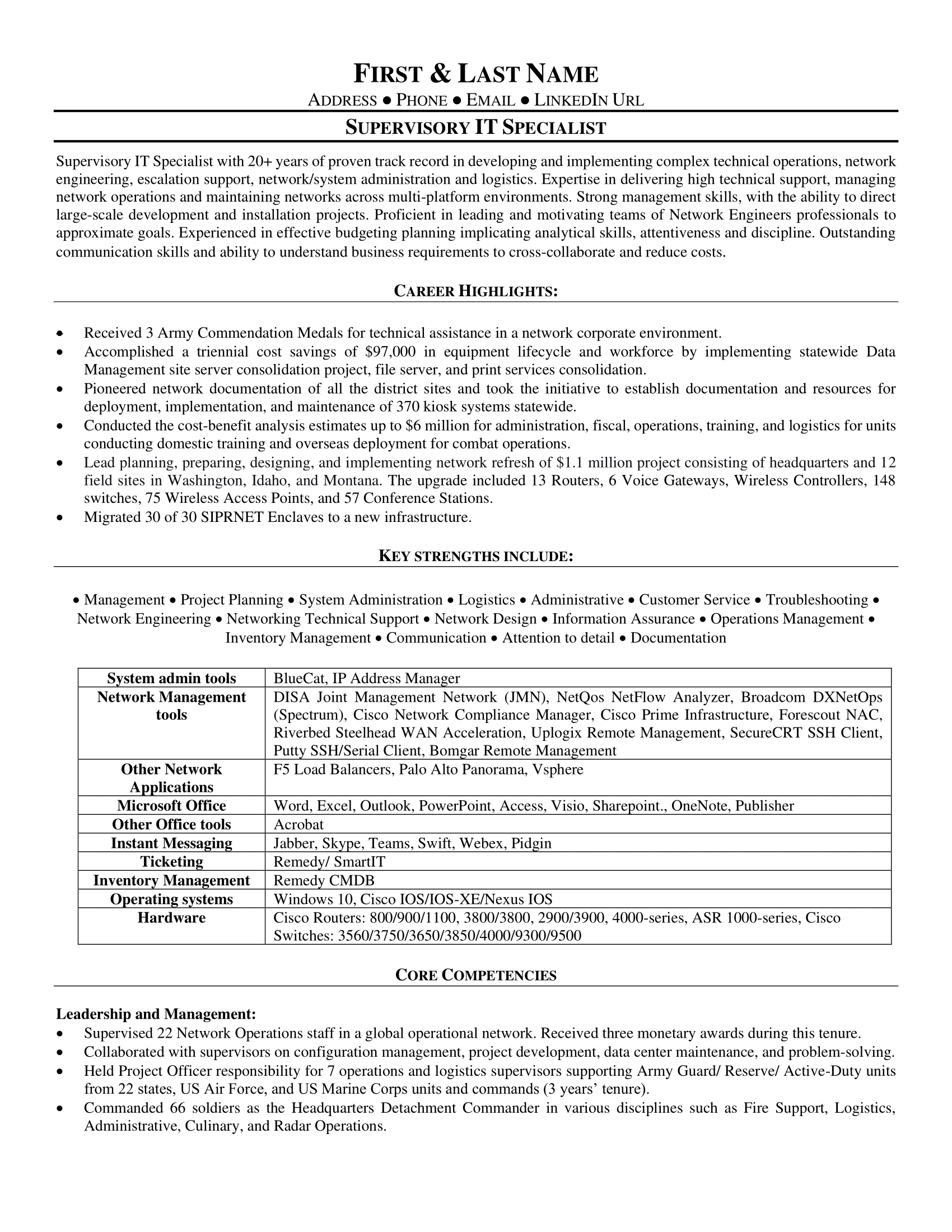
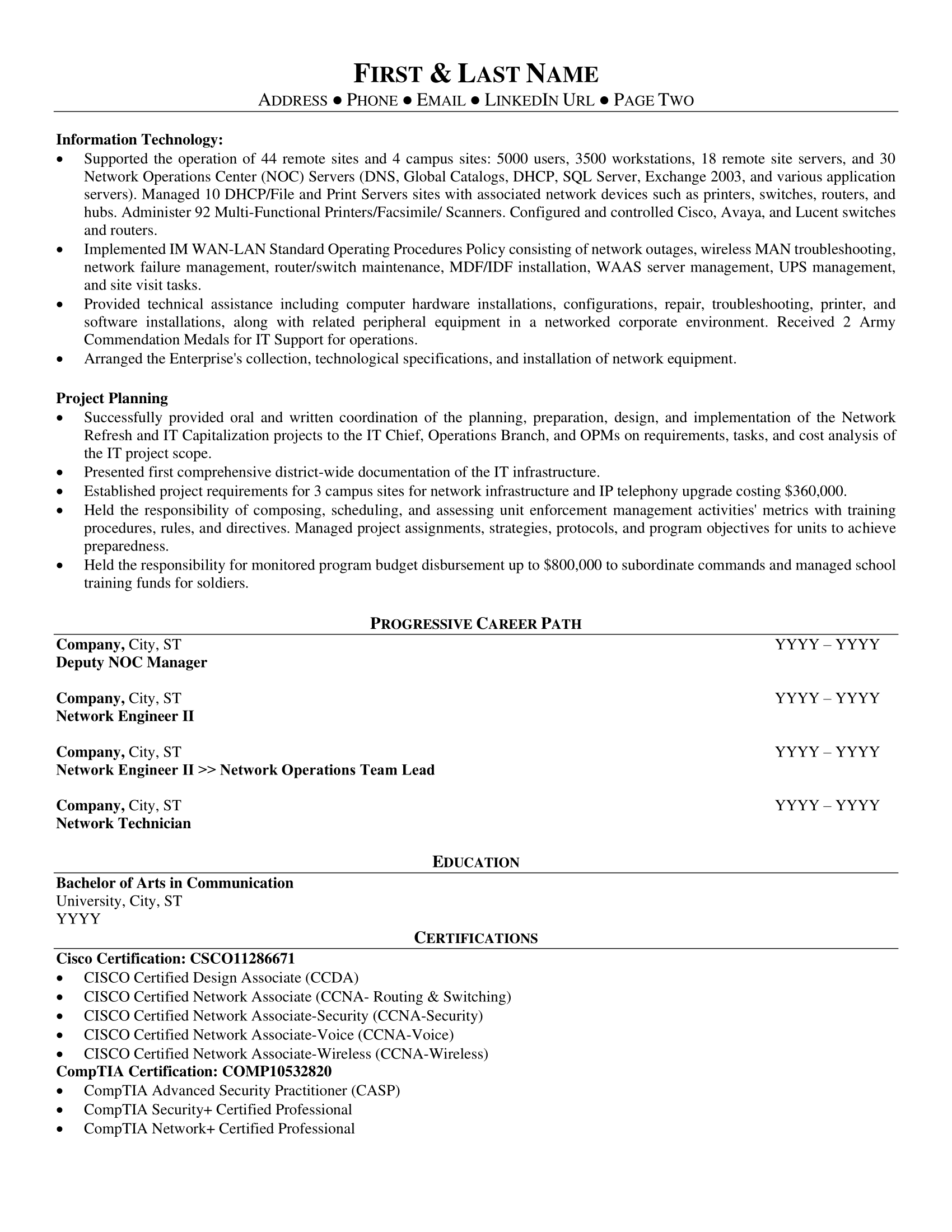
Contrary to popular belief, it’s not necessary to have completely different resumes for each career goal. After all, your professional and academic experience doesn’t change. That said, how you construct an effective resume for multiple career goals does depend upon prioritization and organization of data, and answers to these questions:
1. Are the career fields similar?
2. Are the career fields diverse?
SIMILAR CAREER FIELDS
Let’s say as a Registered Nurse you’ve taught nursing students, you have served as an administrator at a nursing home, and you have worked in a hospital. Three careers, but all related. A resume in this instance can be both general (for application to many jobs) and specific (targeting one job) – it’s all in how you organize and prioritize the information.
For example, your Professional Experience can be broken down into three categories on your resume – Nursing Experience – Administrator Experience – Teaching Experience, with the appropriate employer and daily duties listed within each section (in a reverse chronological format). When applying for Nursing positions, that section would be listed first. When applying for a Teaching position, that section would be listed first.
In this way, one resume, with minor modifications, can be used for many postings.
DIVERSE CAREER FIELDS
You began your professional career in real estate sales, but then transitioned to the paralegal field, and finally chose yet another career in bookkeeping. Three very different careers that would seem to require three separate resumes, but that’s certainly not the case.
To avoid producing resume after resume for each job, and if at least some of the skills are transferable within different industries, then a functional format is best for you.
Functional formats stress professional skills, rather than employers or industries. So, instead of providing a reverse chronological resume that clearly shows you’ve been moving from career to career and back (which some employers might find troubling), a functional resume states core qualifications beneath varying subheadings.
The example given above would warrant three or more subheadings, namely:
Contract Negotiation (Real Estate)
Sales (Real Estate)
Contracts (Paralegal)
Payroll (Bookkeeping).
These subheadings can be organized in order of importance to the targeted position (eg: if Sales interests you, then you would list your Real Estate Experience first, followed by your other experience). The subheadings can also show broad experience that could very well be valued in an economy where employees are expected to wear many hats and to perform many functions.
No Comments yet; your thoughts are welcome.
Category: Entry Level, Executive, Job Search, Military, Professional, Resume, Tips | Tags: Tags: challenging job markets, meeting employer expectations, resume format strengths, resume preparation, resume tips,
Tuesday, March 23rd, 2010
Private sector resumes demand clear language that even those outside of a candidate’s industry can easily understand.
For example, a Certified Public Accountant who works with non-profit companies and the self-employed would not write:
- Oversaw 501 (c)(3) accounts; provided 1099s to meet government regulations.
A non-accountant would be mystified when reading the above. A better way to present the same data would be:
- Oversaw non-profit – 501 (c)(3) – accounts; provided self-employment tax forms (1099s) to relevant parties to avoid IRS related fines and penalties.
One government site – The Defense Finance and Accounting Service – suggests the following:
Using Appropriate Terminology
Use plain English. Write your resume as though you are submitting it for review by someone who has no technical understanding of the kind of work done in positions you may have previously held. Imagine that you are explaining what you have done and the skills you have used to a friend who has never worked in the same kind of jobs as you.
Describe the knowledge and skills you possess and the duties you have performed using terminology common to the general occupational field. Describe skills and experience in universally accepted terms that could be readily understood in both the public and private sectors.
Minimize the use of acronyms in your resume narrative. If you must use them, explain what they represent, what processes or systems they describe, and how you have used the knowledge, skills, or abilities associated with them.
The following examples demonstrate ways “technical goulash” can be translated into something understandable for both the Resume Builder and staffing specialists:
BAD: Use IATS to process travel vouchers.
BETTER: Use an automated financial system, IATS, to compute and process travel reimbursements for transportation, meals, lodging, and similar entitlements.
BAD: Process vouchers and issue a variety of disbursements using SRD1.
BETTER: Using knowledge of disbursing principles and procedures, examine requests for payments to individual military and civilian employees, private sector vendors, and other public agencies. Perform a quality control review to ensure that these requests are in order, assign appropriate accounting classifications, and prepare checks or electronic transfer payments. Use an automated disbursing system, SRD1, to accomplish these actions.
This straight forward, three sentence paragraph might be sufficient to describe all of the major duties performed by a disbursing clerk or technician position.
BAD: Assist functionals in writing SCRs. Develop interfaces and serve as the POC for all EC initiatives.
BETTER: Work with functional users of automated financial and accounting systems to help identify needed changes and to write system change requests (SCRs). Write computer programs to enable automated systems to interface and to communicate with each other. Serve as the primary contact for automated electronic commerce (EC) systems and improvements.
Descriptions of duties performed, knowledge used, and skills applied in accomplishing those duties should be simple and straightforward, descriptive, and reduced to only essential information. When finished writing a paragraph, it is helpful to stop and ask yourself the following questions:
Would a third party who is not familiar with my occupational background understand the kind of work that I do?
Is there nonessential information (nice to have, but not helpful in meeting mandatory qualification requirements) in what I have written?
Have I omitted any unique, but relevant special experience or skills I possess that might distinguish me from other candidates if my resume reaches the desk of a selecting official?
Have I adequately described the major characteristics of my occupation or background and skills that are most common to my occupation?
Tuesday, November 17th, 2009
The skills and experience information in modern resumes can be listed using three separate formats:
1. Reverse chronological
2. Functional
3. A combination of the two
Reverse chronological
Generally speaking, hiring managers prefer that employment data is provided with the most recent job listed first, followed by the next most recent, and so on. In that way, it’s easy to see career progression from an entry-level position to a more senior status. It’s also easy to detect gaps in dates of employment. It’s these gaps that cause candidates to select functional formats.
Functional
Functional formats stress what skills you have, rather than where and when you used them. These formats are best for students who have just graduated from college and have little “real-world” experience; those who have been out of the workforce for long periods because they were raising children; or job seekers who are transitioning from one career or industry to another. However, sometimes joining a functional with a reverse chronological format makes the most sense – these are called combination resumes.
Combination
With this format, skills that are relevant to the current job search are placed in a special section by function, while the Professional History or Work Experience is presented in a standard, reverse-chronological format. This format offers the best of both worlds, and is highly popular with job seekers and hiring managers.
For more information and to see our samples: http://www.resumeedge.com/resume-writing/resumes/resume-types/index.php?nav=rc.rc
No Comments yet; your thoughts are welcome.
Category: Entry Level, Executive, Job Interview, Job Search, Military, Professional, Resume, Samples, Student, Tips | Tags: Tags: combination, combo resume, functional, functional resume, resume format strengths, resume format weaknesses, reverse-chrono resume, reverse-chronological,
Tuesday, November 10th, 2009
By Marina Ricci, JD, ResumeEdge.com Editor
If unemployment or underemployment has given you more free time than you would normally have, take advantage of that time to make yourself more marketable in the current job scene.
One of the best ways to increase skills that could be readily used by future employers is to freelance. Freelancing can include anything from writing to editing to graphic design. Anything that can be done outside of the office on your home computer is considered freelancing. This is the perfect opportunity to bring already-refined skills into the open. Even if the work is unpaid, having work that is published or prominently displayed for future employers in a magazine or Web site is a great way to make your work stand out from the rest of the applicant pool. In addition, the more practice you have in a certain skill area will make your expertise even better.
Another great way to sharpen skills is to obtain a certificate for a certain skill-set at a nearby community college or skill center. Certificates range from Speed-reading to Leadership. Not only are these classes discounted because they are in a neighborhood community college, they will also teach or sharpen your skills. Then, you can use these certificates to obtain an advantage when applying to jobs where most people have the same type of skills at the forefront.
The best way to sharpen skills and obtain experience that is crucial to future employment, especially in a field outside of your expertise, is to intern. Internships are up as companies need more staff and have fewer funds. Thus, unpaid or underpaid internships are everywhere and can be created by companies. Therefore, if you want to go into an industry where you have little experience, this is an opportunity to obtain it. In these types of situations, if your work is really phenomenal, there may be a position that opens up in the company during the internship.
When sharpening up skills in this economy, it is important to make your skills and talents stand out from the rest of the applicant pool. Thus, obtaining publication, certificates or experience that others lack is the fast-track way to getting the job of your dreams.
To request Marina for your resume or cover letter order, please select her name in the ‘select editor’ field of the online order: http://www.resumeedge.com/ or http://resumeedge.ca/
1 Comment
Category: Cover Letter, Curriculum Vitae (CV), Entry Level, Executive, Federal / KSA / Government, Job Interview, Job Search, Military, Professional, Resume, Tips | Tags: Tags: challenging job markets, cover letter preparation, cover letters, Job Search, meeting employer expectations, new job search strategies, resume preparation, resumes, updating skills,